
7 Key Questions to Ask Before Switching to a Self-Funded Health Plan


Discover the most important questions employers should ask before transitioning to self-funded healthcare ensuring lower costs, greater transparency, and improved employee benefits.
Table of Contents
- Before you switch: What you need to know about self-funding
- 7 key questions to ask before switching to a self-funded health plan
- Your next step: A smarter health benefit strategy
- Key takeaways
Before you switch: What you need to know about self-funding
Healthcare costs are climbing every year, leaving many employers searching for smarter ways to manage their benefit plans. Fully insured options often come with rising premiums, little flexibility, and very limited insight into where your money is really going. That’s why more companies are considering self-funded health plans which is a model that offers more control, more transparency, and the potential for significant savings.
In fact, health insurance premiums for employer-sponsored plans jumped 6.5% in 2024, outpacing wage growth and putting added pressure on both businesses and employees.¹ With numbers like these, it’s no surprise that employers are rethinking their benefit strategies.
This infographic is designed to give you a quick, visual guide to the seven key questions you should ask before making the switch to a self-funded health plan. By keeping these questions in mind, you’ll be better prepared to make decisions that reduce costs, improve employee satisfaction, and set your company up for long-term success.
7 key questions to ask before switching to a self-funded health plan
Switching to a self-funded plan can be a smart move, but it’s not a decision to take lightly. Before making the transition, it’s important to pause and ask the right questions. To help, we’ve created a visual infographic guide that lays out the seven key questions every employer should consider.
👉 Preview: Here’s a quick look at what you’ll find inside:
1. What are my company’s healthcare cost drivers?
Review claims history and chronic condition management. Understanding your top cost drivers helps determine if self-funding makes financial sense.
2. Do we have enough employees to benefit from self-funding?
Self-funded plans are often a better fit for companies with 100+ employees. Smaller employers may want to explore level-funded options that reduce risk.
3. How can we protect against high-cost claims?
Stop-loss insurance is essential. The right coverage caps protect your business from unexpected, high-cost claims.
4. What networks and providers will be available to employees?
Employees care about access. Make sure your plan offers trusted physicians and leading medical networks with flexible care options.
5. How will pharmacy and medical benefits be integrated?
Look for transparent PBM solutions with 100% rebate pass-through.
💡 Did you know? *Prescription drug spending accounts for nearly 25% of total healthcare costs for employers.*²
6. What kind of member support services will be offered?
Concierge services, care navigation, and medical management programs help members make smarter choices and achieve better health outcomes.
7. Does this align with our company’s long-term strategy?
Your benefits should grow with your company. Self-funding works best when it supports cost savings and employee well-being for the long run.
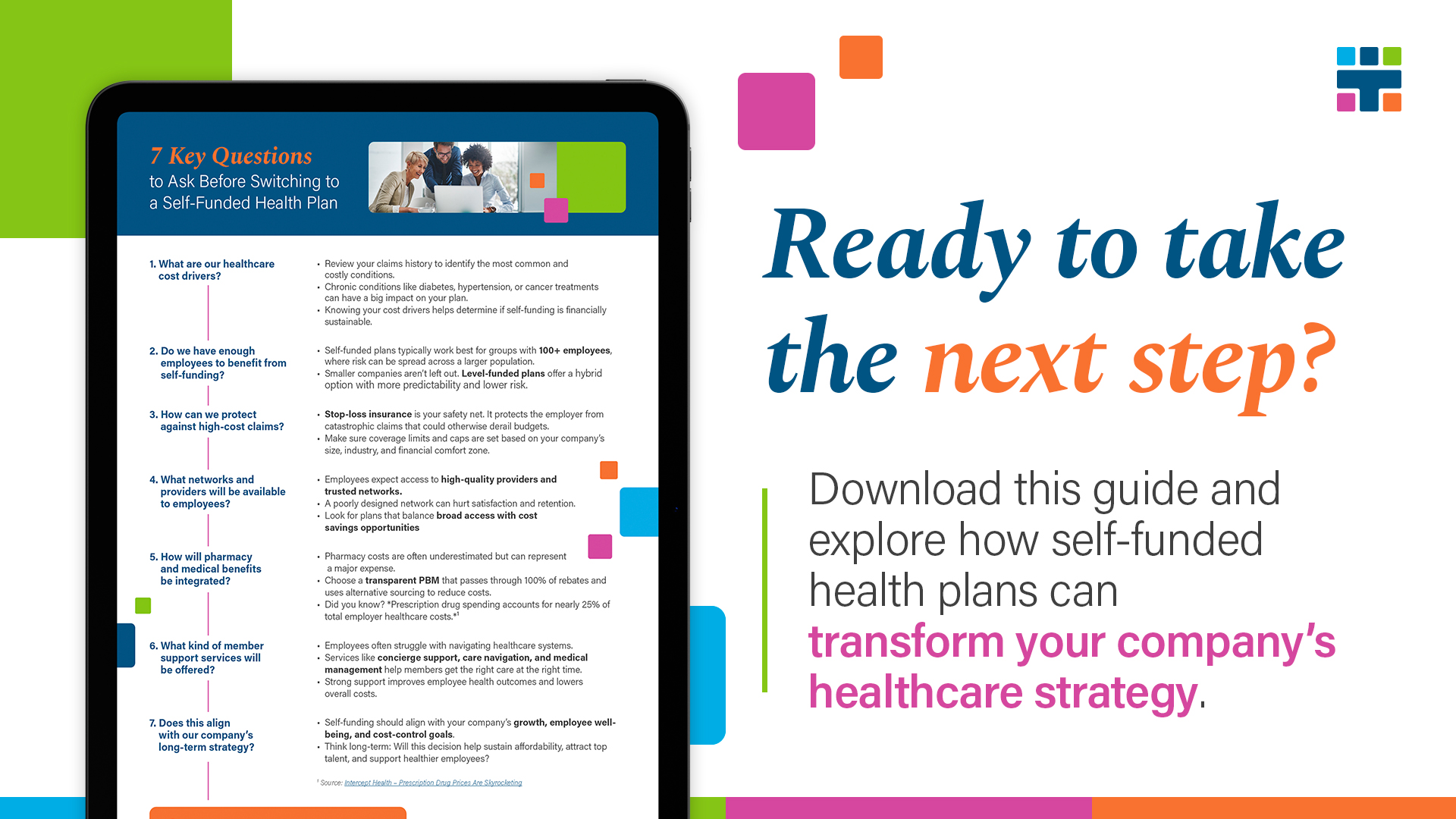
📥 Download the Full Infographic
This is just a snapshot of what you’ll find inside the complete guide. Download the full infographic to get a clear, visual breakdown of these seven questions and see how self-funding could work for your organization.
Your next step: A smarter health benefit strategy
Asking the right questions is the first step toward making self-funding work for your company. By evaluating your cost drivers, employee needs, and long-term goals, you can transition with confidence and avoid costly mistakes.
At Trinity, we believe in building benefit strategies that put people first combining transparency, innovation, and compassion to create plans that truly work for employers and employees alike. Our goal is simple: to help you lower costs, protect your team, and deliver better health outcomes.
📥 Ready to see if self-funding is the right path for your company?
- 👉 Download our full infographic for a clear, visual breakdown of the 7 key questions every employer should ask.
✅ Already confident about making the switch? Get your free quote today and see how much your company could save with Trinity.

Key takeaways
- Self-funding isn’t for everyone. Asking the right questions helps you determine if it’s the right fit for your company.
- Cost drivers matter. Reviewing claims history and chronic conditions is the first step in evaluating self-funded viability.
- Company size impacts the model. Larger groups benefit most from self-funding, while smaller groups may prefer level-funded options.
- Protection is essential. Stop-loss insurance shields employers from catastrophic claims.
- Networks and pharmacy integration drive value. Transparent PBMs and strong provider networks help balance savings with employee satisfaction.
- Support services improve outcomes. Concierge and care navigation make benefits easier for employees to use.
- Think long-term. A self-funded strategy should align with your growth, cost-control goals, and employee well-being.
👉 Whether you’re still exploring or ready to act, download the infographic for a full breakdown and if you’re confident self-funding is your next step, request a free quote from us today.
Footnote Markers: